
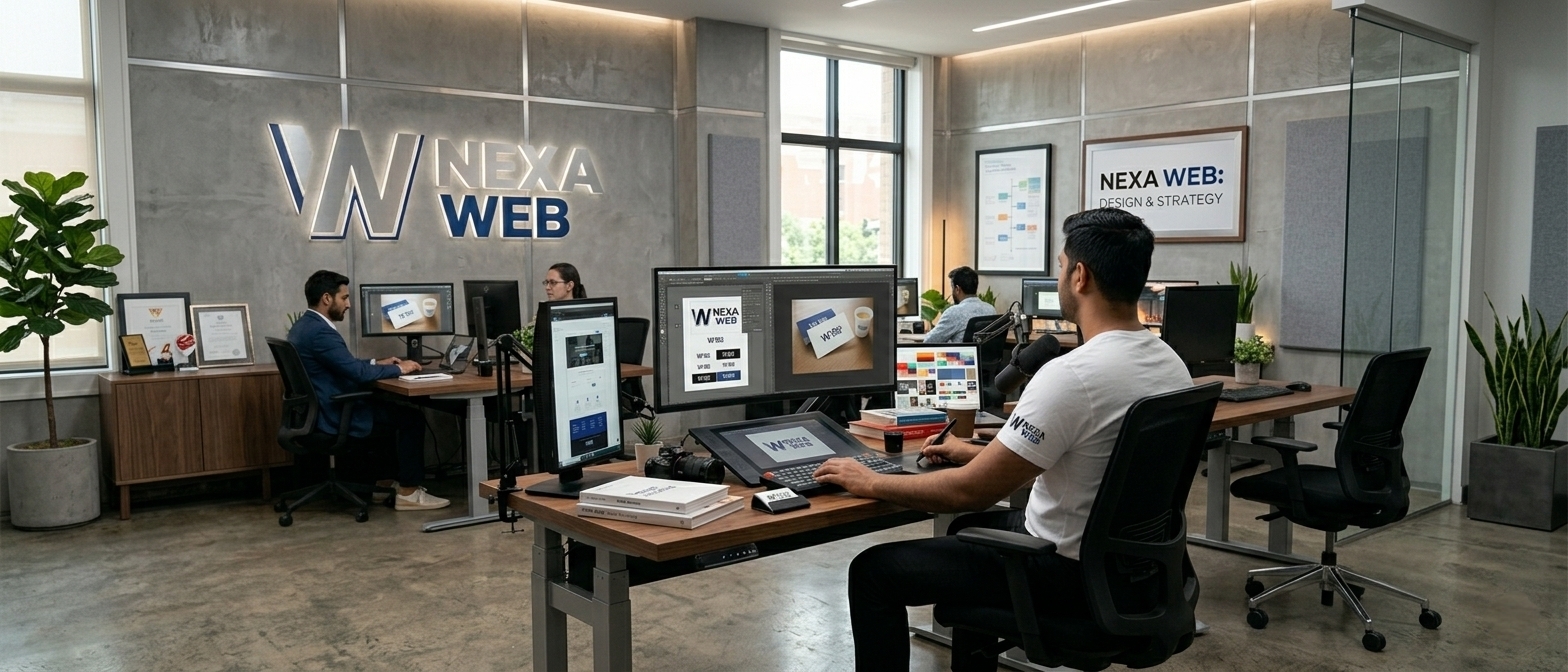
Choose the brochure's job
A service brochure should support a specific conversation. For a Jayanagar business, decide whether readers are discovering the offer, comparing services or preparing for a quotation. One document need not do all three equally.
List the questions a reader must answer before taking the next step. Remove internal jargon that only staff understand. Use the actual service names and approved explanations before reviewing visual concepts.
Build a useful information hierarchy
Put the offer and intended reader before background material. Explain scope boundaries and what the customer needs to provide. If services differ, make those distinctions visible rather than repeating a general company introduction.
In an illustrative brochure, a short comparison can separate a one-time implementation from ongoing support. The distinction is useful only if it reflects the real service. Do not invent packages to make the layout symmetrical.
Specify digital and print needs separately
A PDF read on a phone and a printed handout have different practical constraints. Discuss page size, text legibility, links and production files. Ask the designer to explain which export is intended for each use.
Confirm font and image licences, and retain permission for customer material. Before printing, check contact details and any QR destination. An attractive proof can still send a reader to the wrong address.
Review with a customer task
Ask a reviewer to find the service that fits a stated need and identify the next step. Note where the document makes them guess. Consolidate factual corrections separately from visual preferences.
Bring Nexaweb the approved service information, intended uses and print requirements. Agree editable files, export formats and who performs the final production check before commissioning the brochure.